Setting up a kitchen can quickly become overwhelming. Walk through any cookware aisle and you’ll find dozens of frying pans, saucepans, Dutch ovens, stockpots, specialty skillets, baking dishes, and kitchen gadgets competing for your attention.
The good news is that you don’t need every type of cookware available.
A thoughtfully chosen collection of essential cookware pieces can handle most everyday recipes, from scrambling eggs and simmering sauces to preparing soups, roasting vegetables, and cooking family dinners.
The key is choosing versatile cookware that matches the way you actually cook.
In this guide, we’ll cover the 10 essential cookware pieces every home kitchen needs, explain what each one is best used for, and share practical tips for choosing cookware that can serve you for years.
Whether you’re building your first kitchen, replacing worn-out cookware, or simply trying to reduce clutter, these are the pieces worth considering.
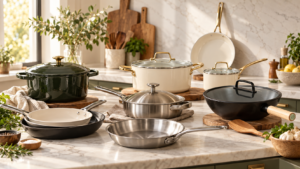
Why Choosing the Right Cookware Matters
Good cookware does more than hold food while it cooks.
The right pots and pans can help distribute heat evenly, reduce burning, make food easier to handle, and simplify cleanup afterward.
Poorly designed cookware may develop hot spots, warp over time, or make everyday meals unnecessarily difficult.
That doesn’t mean you need the most expensive cookware available. Instead, focus on versatility, durability, and whether each piece fits your cooking habits.
A home cook who prepares pasta, soups, vegetables, chicken, rice, and breakfast foods can accomplish a surprising amount with only a handful of dependable pieces.
Here are the cookware essentials worth prioritizing.
1. 10-Inch Frying Pan
A 10-inch frying pan is arguably one of the most useful cookware pieces in any kitchen.
It’s large enough for everyday meals but compact enough to heat quickly and remain easy to handle.
You can use it for:
- Eggs
- Omelets
- Pancakes
- Vegetables
- Chicken breasts
- Fish
- Burgers
- Grilled sandwiches
- Small stir-fries
For one or two people, a 10-inch skillet may become the pan you reach for most often.
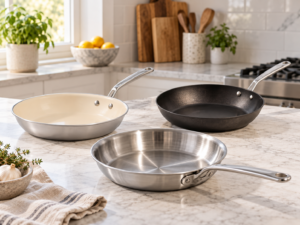
What Material Should You Choose?
A ceramic or traditional nonstick frying pan is convenient for delicate foods such as eggs and pancakes.
Stainless steel is better when you want strong browning and the ability to create pan sauces.
Carbon steel provides excellent high-heat performance while becoming increasingly nonstick as it develops seasoning.
If you’re building a kitchen from scratch, having at least one reliable 10-inch skillet is an excellent place to begin.
2. 12-Inch Frying Pan
A larger 12-inch frying pan becomes especially useful when cooking family meals.
The additional cooking surface prevents overcrowding, which is important when trying to brown meat or vegetables.
When ingredients are packed too closely together, moisture gets trapped and food may steam instead of developing a flavorful browned surface.
A 12-inch pan works well for:
- Chicken thighs
- Steaks
- Large vegetable sautés
- Pasta dishes
- Breakfast for several people
- Stir-fries
- Fish fillets
- One-pan dinners
If your household has three or more people, you’ll probably appreciate having both a 10-inch and a 12-inch frying pan.
3. 2–3 Quart Saucepan
Every kitchen needs a dependable saucepan.
A 2- to 3-quart saucepan is ideal for smaller cooking tasks and can quickly become one of your most-used kitchen tools.
Use it for:
- Heating soup
- Making oatmeal
- Cooking rice
- Preparing sauces
- Boiling eggs
- Making gravy
- Cooking vegetables
- Heating leftovers
- Making small batches of pasta
A saucepan with a well-fitting lid is particularly useful because the lid helps retain heat and moisture.
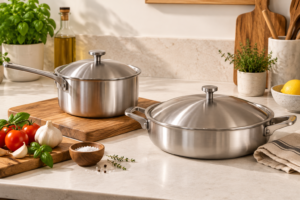
Stainless Steel or Nonstick?
Stainless steel is an excellent all-purpose choice because it’s durable and works well for sauces, grains, vegetables, and boiling.
Ceramic nonstick can be useful if you frequently make oatmeal, creamy sauces, or other foods that tend to stick.
For most kitchens, one high-quality 3-quart saucepan is sufficient.
4. 4–5 Quart Sauté Pan
A sauté pan looks similar to a frying pan, but its straight sides provide more usable cooking space and help contain sauces and liquids.
This makes it one of the most versatile essential cookware pieces for family cooking.
A sauté pan is excellent for:
- Chicken and vegetables
- Pasta dishes
- Curries
- Braised meats
- One-pan meals
- Shallow frying
- Large batches of sauce
- Risotto
- Meatballs
A lid makes a sauté pan even more useful because you can start a recipe by browning ingredients and then cover the pan to simmer everything gently.
If you prefer cookware that can perform several jobs instead of owning many specialty pans, a large sauté pan is an excellent investment.
5. Large Stockpot
A 6- to 8-quart stockpot is another kitchen essential, particularly for families.
Its tall sides and generous capacity make it suitable for recipes that require plenty of liquid.
Use a stockpot for:
- Pasta
- Soup
- Chili
- Homemade stock
- Corn on the cob
- Boiled potatoes
- Seafood boils
- Large batches of vegetables
- Meal-prep recipes
Stainless steel works particularly well for stockpots because it’s durable and doesn’t require a nonstick coating.
Look for sturdy handles and a well-fitting lid.
You don’t necessarily need a very expensive stockpot because many stockpot recipes contain plenty of liquid, which reduces the importance of extremely precise heat distribution.
6. Dutch Oven
Few cookware pieces are as versatile as a Dutch oven.
Typically made from cast iron or enameled cast iron, Dutch ovens retain heat exceptionally well and can move from stovetop to oven.
They’re ideal for slow-cooked meals such as:
- Beef stew
- Pot roast
- Chicken dishes
- Chili
- Braised short ribs
- Soups
- No-knead bread
- Baked pasta
- Beans
A 5- to 6-quart Dutch oven is a practical size for most households.
Why Is a Dutch Oven So Useful?
Its thick walls help maintain steady heat while the heavy lid keeps moisture inside.
That makes it particularly effective for long, slow cooking where ingredients need time to become tender.
A quality Dutch oven can also last for decades when properly cared for.
7. Cast-Iron Skillet
A cast-iron skillet is one of the most durable cookware pieces you can own.
When properly seasoned, it develops a naturally slick cooking surface while handling temperatures that would damage many traditional nonstick pans.
Cast iron is excellent for:
- Steak
- Burgers
- Cornbread
- Fried chicken
- Roasted vegetables
- Breakfast potatoes
- Skillet pizza
- Baked desserts
It can move directly from the stovetop into the oven, making it useful for recipes that begin with searing and finish with baking.
Things to Know Before Buying
Cast iron is heavier than stainless steel or aluminum cookware.
It also needs a little more care. You’ll want to dry it promptly after washing and occasionally refresh the seasoning.
However, with proper maintenance, a cast-iron skillet can last generations.
8. Carbon Steel Frying Pan
Carbon steel cookware has become increasingly popular among home cooks because it combines several characteristics of stainless steel and cast iron.
It heats relatively quickly, handles very high temperatures, and becomes more naturally nonstick as seasoning develops.
A carbon steel pan is particularly good for:
- Searing steaks
- Eggs
- Stir-fries
- Chicken
- Vegetables
- Fish
- Burgers
- High-heat cooking
It’s generally lighter than cast iron, which can make it easier to handle.
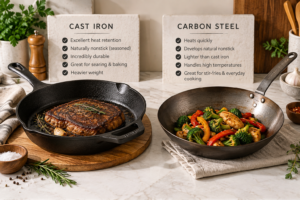
Carbon Steel vs Cast Iron
Both require seasoning and benefit from regular use.
Cast iron retains heat longer, while carbon steel responds more quickly when you increase or decrease the burner temperature.
Home cooks who enjoy high-heat cooking may find carbon steel especially useful.
9. Roasting or Baking Pan
Not every essential piece of cookware belongs on the stovetop.
A sturdy roasting or baking pan is important for oven cooking.
Depending on the style, you can use one for:
- Roasted chicken
- Vegetables
- Potatoes
- Lasagna
- Casseroles
- Meatloaf
- Baked pasta
- Sheet-pan dinners
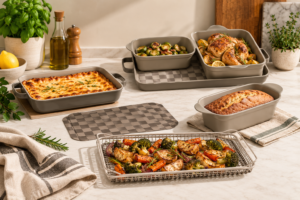
A heavy-gauge metal pan generally distributes heat more evenly than very thin bakeware.
If possible, choose a pan that’s sturdy enough not to twist or warp when exposed to high oven temperatures.
For smaller kitchens, a versatile sheet pan may be more practical than a large traditional roasting pan.
10. Steamer or Strainer Insert
A steamer or strainer insert may seem like an optional accessory, but it can significantly increase the versatility of cookware you already own.
A stainless-steel insert can often fit inside a saucepan or stockpot.
Use it for:
- Steaming vegetables
- Cooking dumplings
- Draining pasta
- Steaming seafood
- Rinsing grains
- Blanching vegetables
If you regularly cook pasta, vegetables, or grains, a nesting strainer can also reduce the number of separate kitchen tools you need.
Choosing cookware with compatible accessories is a smart way to maximize limited cabinet space.
Quick Guide to Essential Cookware Pieces
| Cookware | Recommended Size | Best For |
| Frying Pan | 10 inch | Eggs, breakfast, small meals |
| Large Frying Pan | 12 inch | Family meals, meat, vegetables |
| Saucepan | 2–3 qt | Sauces, rice, oatmeal |
| Sauté Pan | 4–5 qt | One-pan meals, curries, pasta |
| Stockpot | 6–8 qt | Soups, pasta, large meals |
| Dutch Oven | 5–6 qt | Braising, stews, bread |
| Cast-Iron Skillet | 10–12 inch | Searing, frying, oven cooking |
| Carbon Steel Pan | 10–12 inch | High-heat cooking |
| Roasting/Baking Pan | Medium/Large | Oven meals |
| Steamer/Strainer | Compatible size | Compatible size Vegetables, pasta, grains |
How to Choose the Right Cookware for Your Kitchen
Before buying cookware, think about how you normally prepare meals.
Someone who cooks mostly quick breakfasts and simple dinners needs different cookware from someone who regularly prepares large family meals.
Consider these factors before purchasing.
Cooking Style
Think about your most frequently prepared foods.
If you cook eggs every morning, investing in a quality nonstick skillet makes sense.
If you frequently sear steaks, stainless steel, carbon steel, or cast iron may be more useful.
If soups and curries are common in your household, prioritize a good Dutch oven, sauté pan, or stockpot.
Cooktop Compatibility
Not every pan works with every stove.
Gas and electric cooktops accept most cookware, while induction ranges require magnetic materials.
If you use induction, confirm that the cookware is specifically listed as induction-compatible before purchasing it.
Oven Safety
Cookware that can move from stovetop to oven gives you much more flexibility.
Check both the pan and handle temperature limits.
Remember that lids may sometimes have lower oven-safe temperature ratings than the pan itself.
Storage Space
Large cookware collections can quickly overwhelm kitchen cabinets.
If your kitchen has limited storage, look for pans that stack or nest together.
Multipurpose cookware can also help you avoid buying pieces that perform nearly identical jobs.
Understanding Common Cookware Materials
Choosing the right material is just as important as choosing the right pan.
Stainless Steel
Stainless steel is durable, versatile, and excellent for browning food.
It’s particularly useful for:
- Meat
- Sauces
- Pasta
- Vegetables
- Deglazing
Quality stainless-steel cookware can last for decades.
Ceramic Nonstick
Ceramic nonstick cookware is popular because food releases easily and cleanup is generally simple.
It’s useful for:
- Eggs
- Pancakes
- Fish
- Oatmeal
- Delicate foods
Use wooden, silicone, or nylon utensils rather than sharp metal tools to help protect the cooking surface.
Cast Iron
Cast iron offers excellent heat retention and durability.
It’s particularly good for searing and oven cooking.
The main drawbacks are weight and maintenance.
Carbon Steel
Carbon steel is lighter than cast iron while still providing excellent high-heat performance.
Like cast iron, it develops seasoning over time.
Aluminum
Aluminum conducts heat extremely well and is commonly used as the core material inside cookware.
Bare aluminum can react with certain acidic foods, so it’s often anodized, coated, or combined with other metals.
Do You Need a Complete Cookware Set?
Not necessarily.
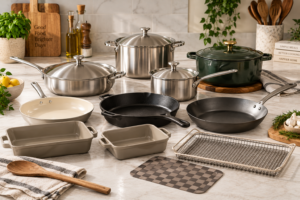
Cookware sets can offer good value, especially when you’re furnishing an entire kitchen. However, large sets sometimes include pieces you’ll rarely use.
Before buying a set, look carefully at what’s included.
A practical cookware set should contain several genuinely useful pieces rather than increasing the piece count with numerous lids and accessories.
For many households, a combination of five or six highly versatile pans performs better than a cabinet filled with rarely used cookware.
How Much Should You Spend on Cookware?
There’s no single correct budget.
High-quality cookware can be expensive, but price alone doesn’t guarantee better results.
Prioritize the cookware you use most frequently.
For example, it may make sense to invest more in:
- Your primary frying pan
- Dutch oven
- Sauté pan
- Saucepan
You can often spend less on items that are used occasionally, such as a large stockpot.
Building your cookware collection gradually also allows you to learn what you genuinely need.
How to Make Cookware Last Longer
Even premium cookware can wear out quickly if it’s used incorrectly.
Follow manufacturer care instructions and consider these general habits:
- Avoid overheating empty cookware.
- Use appropriate utensils for the cooking surface.
- Allow hot pans to cool before washing.
- Avoid abrasive cleaners on coated cookware.
- Dry cast iron and carbon steel promptly.
- Store cookware carefully to prevent scratching.
- Use low to medium heat with most nonstick cookware.
Good maintenance can significantly extend the useful life of your pots and pans.
Frequently Asked Questions
What cookware does every kitchen really need?
At minimum, most kitchens benefit from a frying pan, saucepan, sauté pan, and stockpot. Adding a Dutch oven, cast-iron skillet, and baking pan provides even more versatility.
How many pots and pans should a home kitchen have?
Most home cooks can comfortably prepare everyday meals with about five to eight versatile pieces. You don’t need a huge cookware collection if each pan serves several purposes.
Is stainless steel or nonstick better?
Neither is universally better.
Nonstick cookware is convenient for delicate foods and easy cleanup, while stainless steel is excellent for browning, searing, sauces, and long-term durability.
Many kitchens benefit from having both.
Is expensive cookware worth it?
Quality cookware can be a good investment when it improves durability, heat distribution, and usability. However, expensive cookware isn’t necessary for every task.
Invest most heavily in the pieces you use regularly.
What is the most versatile cookware piece?
A large sauté pan or Dutch oven is among the most versatile choices because either can handle numerous cooking techniques and recipes.
Should cookware match?
No.
There’s no culinary advantage to having every piece from the same brand or collection.
Mixing stainless steel, ceramic nonstick, cast iron, and carbon steel can actually provide greater versatility.
Final Thoughts: Build a Kitchen Around How You Cook
The best cookware collection isn’t necessarily the biggest or most expensive.
It’s the collection that makes preparing your favorite meals easier.
Start with the essential cookware pieces you’ll use every week: a dependable frying pan, saucepan, sauté pan, and stockpot. From there, add cookware such as a Dutch oven, cast-iron skillet, or carbon steel pan based on the recipes you enjoy preparing.
Choosing versatile, durable pieces also helps reduce kitchen clutter while giving you everything you need for breakfast, weeknight dinners, special occasions, and meal prep.
At Ariyanna Kitchen, our goal is to help home cooks make informed decisions about cookware, kitchen tools, and everyday cooking—so you can spend less time wondering what you need and more time enjoying the food you create.
Disclosure: This article may contain affiliate links. If you make a purchase through one of these links, Ariyanna Kitchen may earn a commission at no additional cost to you. We recommend products based on their features, usefulness, and suitability for home cooking.